
Welcome to the launch of Software Toolbox’s Summer of IoT blog series for 2025.
In the coming posts, we’ll explore how our solutions support the evolving world of the Industrial Internet of Things (IIoT), and more importantly, how they can help you advance your Industry 4.0 and digital transformation goals with practical, proven tools. We begin the series by exploring Unified Namespace (UNS), what it means, why it matters, and how Software Toolbox makes it practical for real-world industrial environments.
Unified Namespace, Real Results: Lessons and Tools that Deliver
In today’s fast-evolving industrial landscape, seamless connectivity and data integration are critical for operational success. At Software Toolbox, our solutions are designed to empower businesses by enabling UNS connectivity, bridging the gap between diverse systems and helping with efficiency, interoperability, and scalability.
Personally, as a presenter and attendee of ProveIt! 2025 and an attendee of 4.0 Solutions’ Edge Integration to UNS Workshop, I have had a lot of exposure to the topic of UNS this year. In this blog post, I will share not only what I have learned surrounding the topic, but how Software Toolbox’s solutions fit into the picture.

What is UNS Enablement?
Unified Namespace (UNS) refers to a standardized framework that allows industrial systems, devices, and software to communicate effectively by providing a unified data structure. Unified Namespaces use MQTT, OPC UA, and more to integrate systems in a hub and spoke model. UNS enablement promotes and supports the utilization of a UNS and ensures that data from various sources such as PLCs, SCADA systems, and IoT devices can be accessed, organized, and utilized in a consistent and meaningful way.
Why UNS Matters
Adopting a UNS approach gives you real-time, contextualized data. Being able to make informed, data-driven decisions leads to streamlined operations, better business outcomes, and less risk. Without a UNS, you’d have to rely on point-to-point integrations, data silos, and manual reporting, which can be unreliable and non-transparent. Software Toolbox is at the forefront of this modern digital transformation, offering tools that simplify UNS integration and maximize its benefits.
UNS enables modern digital transformation by providing:
- Real-Time Data Access: Instant access to contextualized data
- Scalability: Centralized hub supports thousands of devices and assets
- Legacy Device Integration: Gateways bridge older systems to modern architecture
- Interoperability: Standardized data models ensure compatibility across diverse systems
OPC UA and MQTT are cornerstone protocols for modern industrial connectivity. OPC UA provides a secure, platform-independent standard for structured data exchange, while MQTT offers lightweight, efficient messaging for IoT and real-time applications. These protocols aren’t an either/or situation. In fact, they work well together because they each have their strengths and serve different purposes based on your use case. Together, they form a robust foundation for building a UNS that integrates systems into a cohesive, standardized data framework.
One point that is sometimes lost in this whole digital transformation movement is that this is a process that takes time, and companies are often not in positions to rip and replace all their legacy systems. This begs the question of how you can benefit from a UNS without access to state-of-the-art edge devices, but by maintaining your legacy equipment.
Software Toolbox harnesses technologies such as OPC UA and MQTT to enable UNS, ensuring that data from devices and systems, legacy or modern, is accessible.

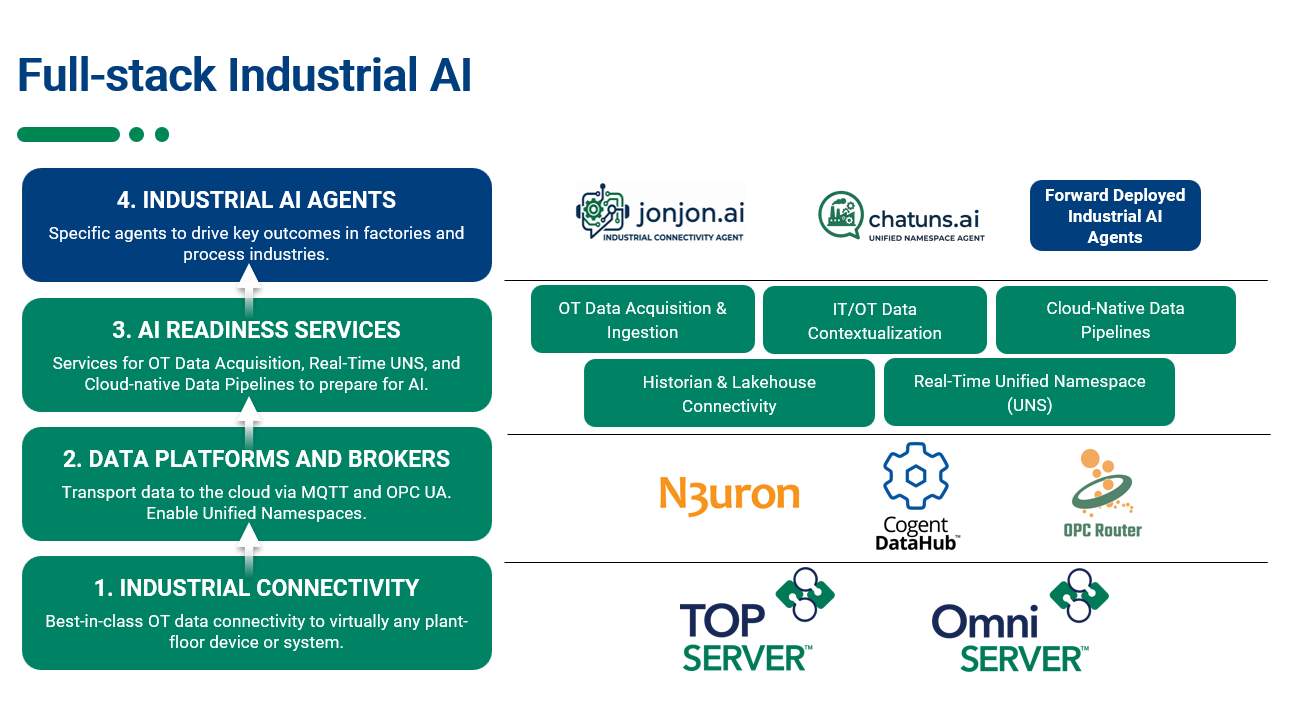
How Software Toolbox Enables a UNS
If your organization is considering building and managing a robust UNS, with a focus on integrating legacy and modern systems for operational efficiency, we offer solutions that align well with your UNS requirements:
- TOP Server:
- Exposes data from legacy or modern PLCs, RTUs, and field devices (Modbus, Allen-Bradley, Siemens) via OPC UA.
- OmniServer:
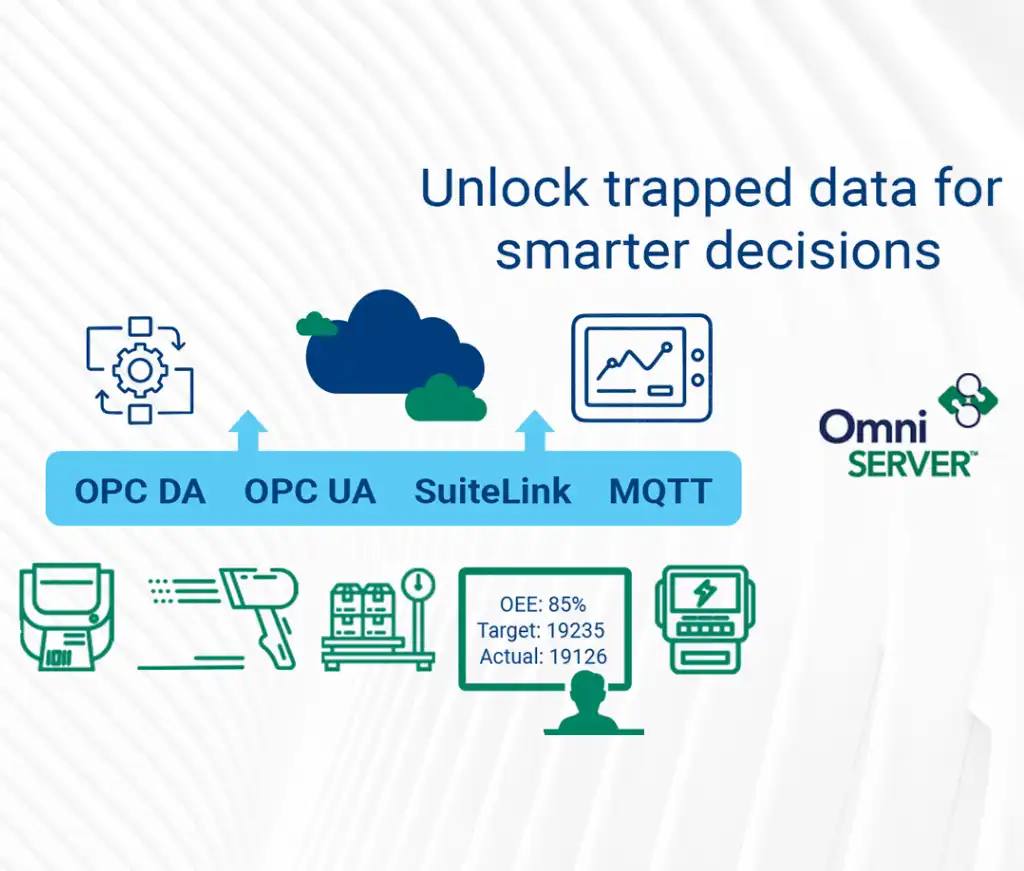
- Enables connectivity for non-standard or proprietary devices lacking native protocol support via a standard driver.
- Can publish data from custom protocols to the UNS via MQTT or expose it over OPC UA, ensuring even legacy, non-standard devices can integrate seamlessly.
- Cogent DataHub:
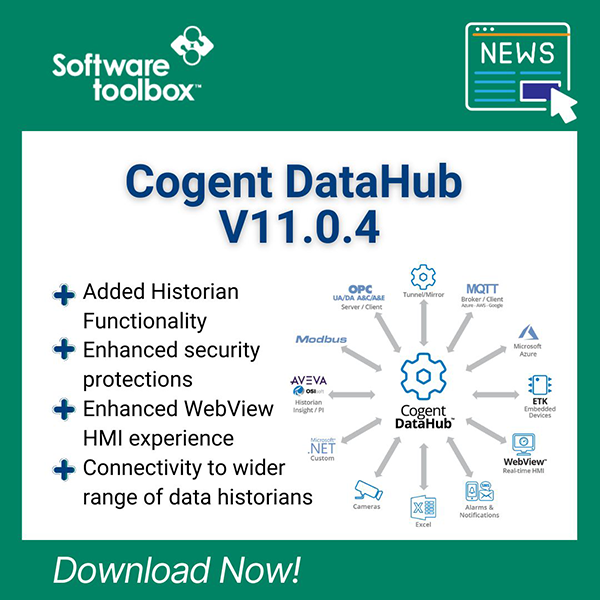
- Facilitates real-time data aggregation and conversion between technologies such as OPC UA and MQTT among others.
- Can publish data to MQTT brokers or can act as an MQTT broker and be published to, supporting the UNS’s event-driven model.
- OPC Router:
- Orchestrates data flows between devices, applications, and the UNS.
- Integrates with databases, ERP systems, and cloud platforms, with bidirectional data exchange.
- Supports plug-ins for MQTT, Sparkplug B, OPC UA, OPC UA Pub/Sub, and more enabling flexible UNS connectivity.
Software Toolbox solutions enable both legacy and modern devices to integrate into a UNS by connecting proprietary or point-to-point systems to modern, event-driven architectures. Our tools collect data from devices and transform it into standardized, UNS-compatible formats for real-time access. They allow for seamless data flows between legacy systems and enterprise applications, ensuring compatibility without requiring hardware replacements. This approach allows organizations to modernize operations incrementally, leveraging existing infrastructure while unlocking the benefits of a centralized, scalable data ecosystem.
Not Sure Where to Start? We Can Help
Ready to take the next step toward a Unified Namespace—without ripping and replacing your existing systems? Our team at Software Toolbox is here to help you identify the right tools and strategies for your specific environment. Whether you're just getting started or looking to scale, we’ll guide you through the options that make the most sense for your goals.
Connect with a Solutions Consultant and discover how to turn your industrial data into real-time insight.