

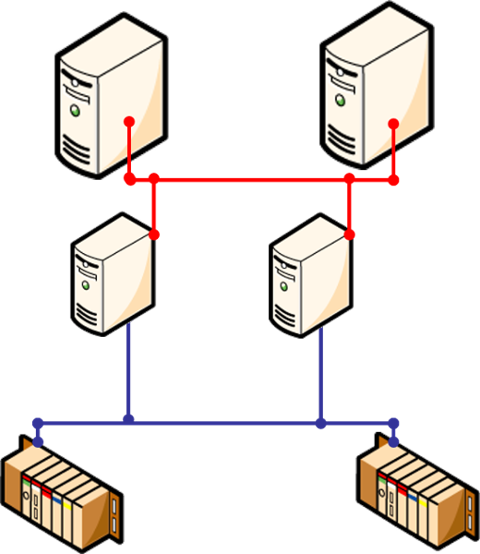
In this edition of OPC Talk with Win and Marc, we’re going to address some common questions we get about redundancy involving OPC software. If you’re new to the industrial automation space and want to learn more about redundancy in automation in general, visit our Demystifying Redundancy in Automation blog post.
Yes, You Can Integrate Business & Other Databases with Control Systems
5 min read

It is common for companies to use databases for long-term storage of their critical information. In our experience, we also see machine setup information, short term operational data and much more besides traditional historical data put into shop floor databases in the operations technology or “OT” world.
Over on the business side or the “IT” world, everything somehow ends up in a database: Production plans, forecasts, orders, it’s all there. Increasing business demands and IT/OT convergence are driving more real-time integration between these databases and control systems.
This blog discusses some of the key reasons users like yourself need this information and then shows how the DataHub can help move this data from a database to your control systems via OPC DA, OPC UA, Modbus and other interfaces or protocols that are common in the automation layer.
OPC Data Client Toolkit Update Speeds OPC UA, DA, A&E, XML Client Development
5 min read
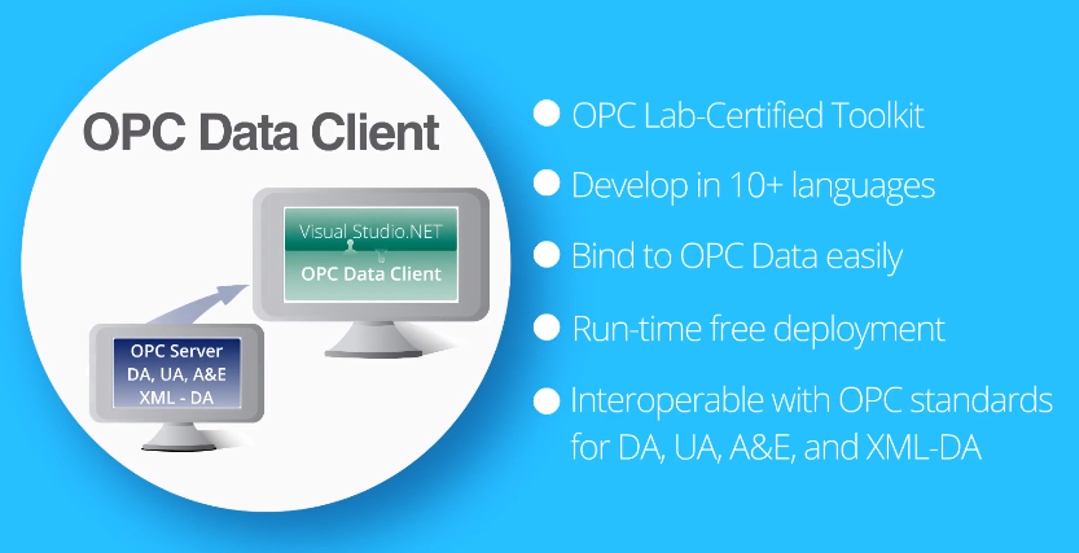
I’m excited about the recent release of the OPC Data Client development toolkit – and you should be too if you’re an active developer of custom OPC Client software applications. This post is highly technical, but hopefully our developer readers will find it useful.
What is OPC – 10 Frequently Asked Questions & Answers
3 min read
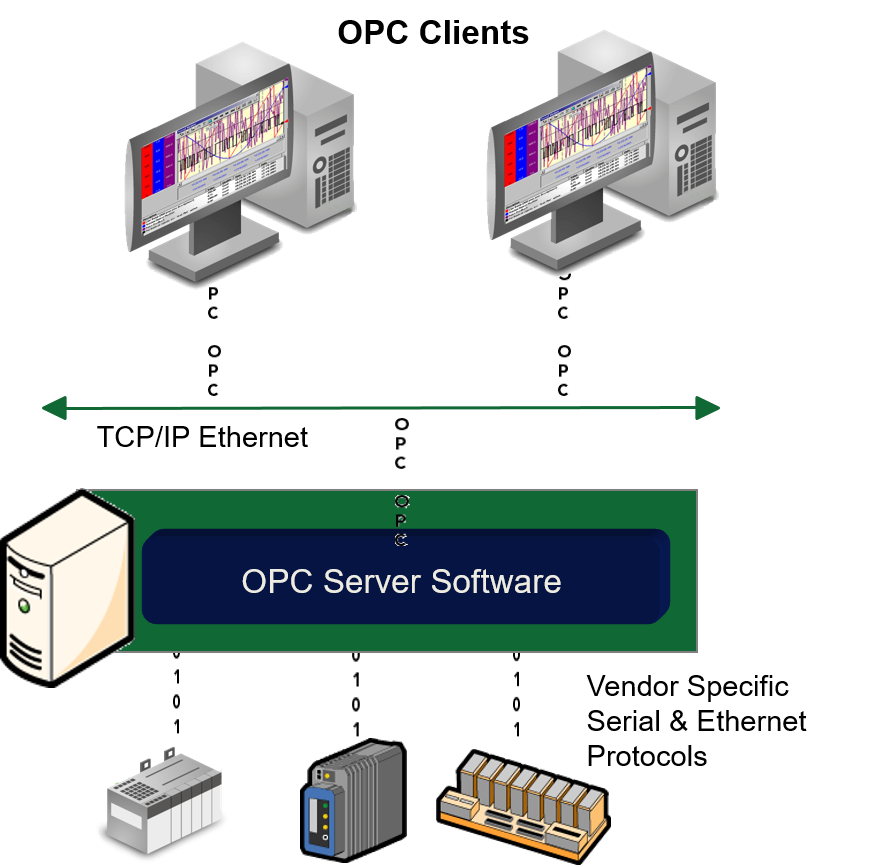
We’ve been working with the OPC software interoperability standards since 1996, and it’s easy to forget that others who are new to this space often find the whole discussion around the OPC standard and all the different standards confusing.
Get It Your Way with DataHub
6 min read

What's "It"? The "it" can mean a lot of things. What we mean is solving software and information integration challenges the way YOU want to solve them, and not being totally limited by the fill in the blank configuration settings in software.
Whether you are a system integrator or a sophisticated user, you know there are times where fill-in-the form software configuration makes things easy, but can also constrain you. Whether it's scability of large configurations, enhancing existing product features to satisfy YOUR NEEDS, or even adding functionality to a product, you don't like being limited by fill-in-the blank software.
The most powerful functionality of the Cogent DataHub is its balance between fill-in the blank quick configuration for most users, and the freedom to "Get it YOUR WAY" for others. Cogent DataHub does this through the free scripting engine that is included in every license.
Logging Smarter - Dynamic Table Selection at Runtime
5 min read

Does your data logging software force you to define the location where you're logging your data ahead of time? Wouldn’t it be nice if your logging software could evaluate your data and make a decision on where the data should be logged?
In this first of two posts in a series on dynamic SQL logging, I'll show you how the OPC Data Logger can easily be configured to switch between SQL Tables at runtime, reducing any post-log sorting you have to do in SQL and saving you time and effort in the process.
Topics:
OPC UA
OPC
OPC Integration
OPC DA
Database & Historian
Data Logging
OPC Data Logger
System Integrators
Continue Reading
Ensuring Maximum OPC Server Availability
7 min read
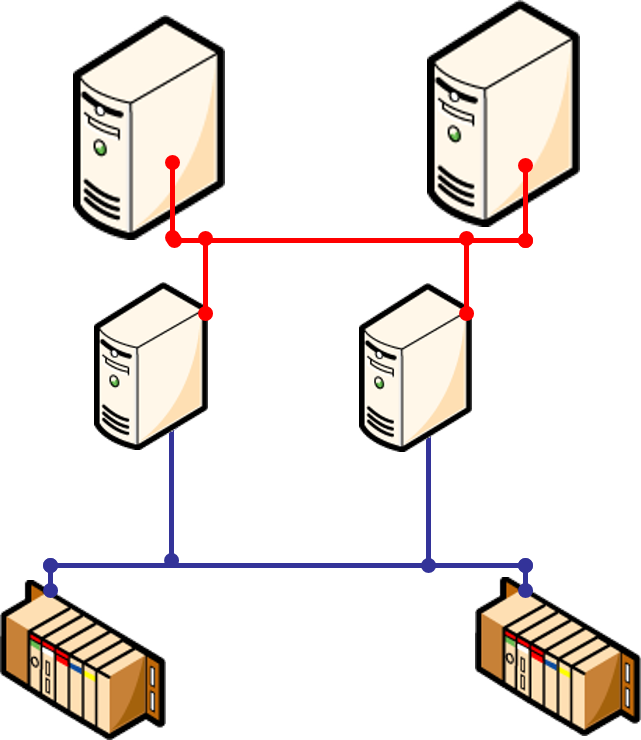
Redundancy can mean a lot of things, as discussed in our Demystifying Redundancy Blog post. In this blog post we want to focus more specifically on one of the use cases in that blog post: managing redundant OPC servers. Just having two OPC servers talking to your PLC’s does not make them redundant. Most OPC Servers don’t have built-in methods of knowing there is another redundant OPC server instance out there.
Some HMI/SCADA systems support redundancy but sometimes it involves scripting and other custom written code. So, in many cases, you need supplemental software to manage and optimize the connections to your two OPC servers. Your OPC client then talks to the redundancy management software as if it is the actual OPC server.
This blog post covers some of the considerations and watch outs when choosing how to manage your OPC server redundancy. After that we will also discuss how the Cogent DataHub can help manage your redundancy to provide high availability for your OPC server communications.
Demystifying Redundancy in Automation
8 min read
I’ve heard from users new to the automation profession that it can be overwhelming to learn about the product technologies used in industrial automation alone, while also learning about the concepts, and having to deliver on the job results. This is the the first post of our Automation 101 blog series which is designed to help professionals that are new to the industrial automation space whether at the start of their careers, or moving into the operations technology (OT) world from an IT or other background.
In this post, I am going to discuss redundancy. The term is often used broadly, and sometimes it can be a simple application, but it can also quickly unravel into a complex discussion with lots of technical details, more than can be covered in a single blog post. Whenever a client contacts us to discuss redundancy, there are many questions we ask to understand what redundancy means in their operation.
My focus will be on providing insight to the reasons why redundancy is used, the business factors that drive how far you go with redundancy, the types or levels found in automation systems, and considerations in the implementation of automation software systems.
