

Software Toolbox Technical Blog

Why Your Industrial Communications Protocol Matters

3 min read

By Marc Holbach on Sep 8, 2016 2:00:00 PM


Software Toolbox has been involved with Industrial Automation communications for over 20 years now and some of us for even longer.  When you've done something for such a long time you can forget that many people in this industry or IT don’t know as much about the topic as they would like.

To help share the collective knowledge we've gained throughout the years, we're starting a series of articles on why protocols matter for getting the most out of your projects.

This introductory blog post to the series will discuss my insights starting out in this industry as an Applications Consultant at Software Toolbox with respect to just how important the actual communications protocol and understanding of its strengths and weaknesses can be to the success of a project.


Continue Reading

Can Your OPC Tunnel Unlock All of Your Data Sources?

2 min read

By Win Worrall on Aug 23, 2016 12:39:14 PM


The word tunneling, when it comes to industrial automation and data, typically goes together with OPC.  OPC tunneling is generally the most common form of tunneling, but what if your data sources aren't OPC?

What if you have more than just OPC clients and servers in your architecture and those non-OPC data sources have vital information that needs to be collected and shared with your other systems?

This blog post will discuss why it's  important for a tunneler solution to support more than just OPC-capable data sources in a diverse control system.

Continue Reading

How Redundancy Can Define Success or Failure in a Control System

3 min read

By Win Worrall on Jul 12, 2016 2:01:29 PM


This is Part 9 of our “25 Things to Consider when Choosing an OPC Tunnel” series.  Will a tunneler support redundant tunnel paths?

Redundancy is typically a more complex topic than it might sound especially if your automation control architecture is extensive and has multiple layers.  Redundancy has different meanings to different people for different applications.

This blog post will outline reasons why it's important for an OPC tunneling solution to support redundant paths for applications where it is essential minimize the risks of failure when transferring your control data and what questions to ask.

Continue Reading

Accessing Wonderware System Platform via OPC UA

5 min read

By Kevin Rutherford on Jun 23, 2016 12:00:00 PM


Have you ever been in a situation where you were working with both Wonderware and some other client (HMI, SCADA, other) and needed to share data?  Perhaps your company acquired another company or assets and a non-Wonderware HMI/SCADA came as part of the assets.  Or perhaps your company merged with another and now your Wonderware system is expected to play nicely with some other system.  Your options for sharing data largely depend on what software interfaces this "other system" supports.

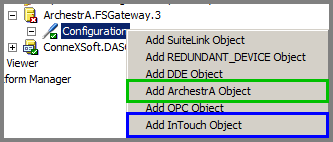
In this blog post, I'll discuss how to share your Wonderware ArchestrA or InTouch data via OPC UA for situations where you're working with an OPC UA capable client application that needs access to process data in your Wonderware system.

Continue Reading

Reasons a Configurable TCP Port is Important for OPC Tunneling

2 min read

By Win Worrall on Jun 21, 2016 11:30:00 AM


This is Part 8 of our “25 Things to Consider when Choosing an OPC Tunnel” series.  What flexibility is there in how ports are configured?

Depending on your level of knowledge regarding OPC tunneling solutions, you may or may not be aware of how a tunneler uses TCP ports for transferring data between machines.  Your IT department likely gives you plenty of trouble whenever you mention needing to open a TCP port.  And with good reason - cyber attacks frequently exploit commonly used TCP ports.

This blog post will outline three top reasons why it's important for an OPC tunneling solution to support fully configurable TCP ports for transferring your data.

Continue Reading

Reasons why DCOM across Windows versions is a nightmare

2 min read

By Win Worrall on Jun 7, 2016 4:19:49 PM


This is Part 7 of our “25 Things to Consider when Choosing an OPC Tunnel” series.  How does the OPC tunneling solution work in a mixed Windows OS environment.

If you have ever used DCOM between two different varieties of Windows operating system (Windows 7 and Windows XP, for instance) you already know how painful it can be to configure DCOM.  DCOM configuration is never a walk in the park but the frustration multiplies when the operating system isn't the same on both machines.

This blog post will outline one of the easiest methods to avoid the problems of configuring DCOM when the operating systems do not match.

Continue Reading

Configuring a tunneler should be quick and easy

3 min read

By Win Worrall on May 24, 2016 2:00:00 PM


This is Part 6 of our “25 Things to Consider when Choosing an OPC Tunnel” series - Configuring a tunneler should be quick and easy.

How easy does the tunneler vendor make it to get started with their solution?  It's important to consider what resources the vendor has made available to you to assist with setup and configuration.  Resources such as videos, FAQs and technical support could mean the difference between your setup taking only minutes to that same setup taking hours or even days.

This blog post will outline some of the expectations you should have from a good tunnel vendor with respect to the resources they can provide to make your experience as user-friendly as possible, both now and in the future.

Continue Reading

Can your tunneler do more than just tunnel?

2 min read

By Win Worrall on May 10, 2016 1:52:44 PM


This is Part 5 of our “25 Things to Consider when Choosing an OPC Tunnel” series. Can your tunneler do more than just tunnel?

Many OPC tunnels out there are just that—an OPC tunnel and nothing more. What if you need to perform another operation with the data besides tunneling it?  In most cases, you'd be stuck introducing an additional piece of software to handle any other operations.

This blog post will outline some of the additional functions you might need from a tunneler and why having a single application is the best architecture.

Continue Reading

About this Blog

We're engineers like you, so this blog focuses on "How to" appnotes, videos, tech team tips, product update announcements, user case studies, and other technical updates.  Subscribe to updates below. Your feedback and questions on posts are always welcomed.

Subscribe to our Blog

Recent Posts

Posts by Topic

See all