
Software Toolbox Technical Blog

Video Tutorial: Configuring DataHub as an MQTT Broker

2 min read

By Win Worrall on Jan 24, 2019 2:00:00 PM


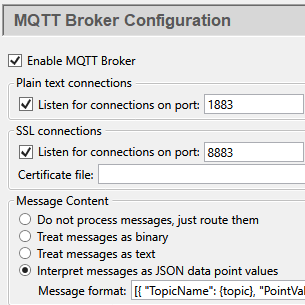
As you are likely already aware, Cogent DataHub Version 9 expanded the assortment of data sources you can integrate to include IIoT (Industrial Internet of Things) with MQTT (Message Queuing Telemetry Transport) support.  As with its many other supported data sources (such as OPC), DataHub V9 can act as both a "client" and a "server" for MQTT - with a "server" being an MQTT broker.

The following short video blog demonstrates how truly easy it is to configure the DataHub MQTT Broker for acting as a "gateway" between MQTT Clients in your IIoT cloud and other supported interfaces including OPC, DDE, ODBC and many other data sources.
Continue Reading

Video Tutorial: Publishing and Subscribing to MQTT Brokers with Cogent DataHub V9

2 min read

By Win Worrall on Jan 17, 2019 2:00:00 PM


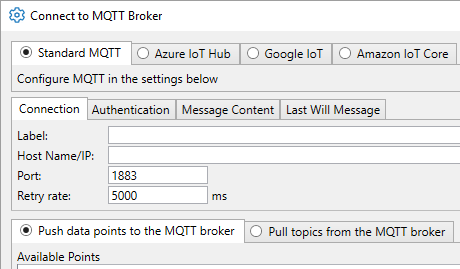
With the release of Cogent DataHub Version 9, we've expanded the multitude of data sources you can integrate to include IIoT (Industrial Internet of Things) with MQTT (Message Queuing Telemetry Transport) support.

The following short video blog demonstrates step-by-step just how easy it is to configure the DataHub MQTT Client for publishing data from DataHub to any MQTT Broker, as well as, subscribing to data from any MQTT Broker for integration into your systems via DataHub's supported interfaces (such as OPC).

Continue Reading

OPC Data Client Development Toolkit Update – UA Platforms, Security, & Interoperability

6 min read

By John Weber on Nov 13, 2018 10:00:00 AM


The 2018.3 release of the OPC Data Client toolkit continues to make OPC UA client development easier, more secure and interoperable, while continuing to support OPC DA, A&E, and XML-DA development.

In this blog post I have taken the release notes and boiled it down to the key benefits that might drive you to upgrade, get back on support, renew support, or, if you’re new to OPC client development, try our OPC Data Client toolkit.

Continue Reading

Cogent DataHub V9 Adds IoT to OPC Connections, Remote Config, & More

4 min read

By Win Worrall on Oct 31, 2018 2:00:00 PM


Cogent DataHub is known for its extensive connectivity to OPC DA, OPC UA, OPC A&E, Databases, Excel, ODBC, DDE, Linux, Modbus.  The new V9 takes our saying that "once the data is in DataHub, it can go anywhere" to a new level with IoT connectors and more as listed below.

In this blog post, I'll provide insight into these new features and show you how Cogent DataHub delivers secure, scalable, integrated connections within and between your plants, to the cloud and beyond.

Continue Reading

Building Custom CRCs for Non-Standard Protocols

4 min read

By Kevin Rutherford on May 17, 2018 2:00:00 PM


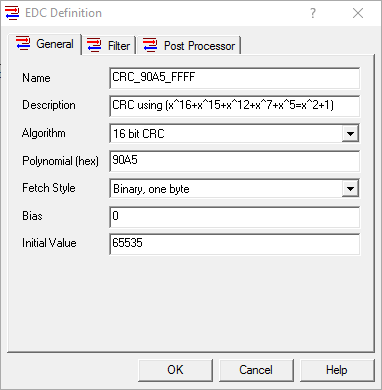
If you’ve been following our blog series on custom error detection, you’ll remember that OmniServer provides a large number of pre-defined Error Detection Codes (EDC) for use in different protocols for non-standard device communication.  And, again, it’s not uncommon to find an EDC from a vendor that is not pre-defined due to some specialized handling by the device manufacturer.

As we covered in our previous posts on creating a custom checksum and LRC, OmniServer gives you the ability to build custom EDCs in an OmniServer protocol to handle these situations.  This post, the final of three on custom Error Detection Codes, covers the basics steps to creating a custom CRC (Cyclic Redundancy Check) in an OmniServer protocol.

Continue Reading

Building Custom LRCs for Non-Standard Protocols

4 min read

By Kevin Rutherford on Apr 19, 2018 2:00:00 PM


You may be aware that OmniServer provides a wide variety of pre-defined Error Detection Codes (EDC, also known as CRC, LRC and Checksums) for use in protocols for non-standard device communication.  However, it’s not uncommon to find an EDC that isn’t pre-defined due to some specialized handling by the device manufacturer.

To handle such situations, OmniServer provides the ability to build your own custom EDCs in an OmniServer protocol.  This post, the second of three on custom Error Detection Codes, will cover the basics of creating a custom LRC (Longitudinal Redundancy Check) in OmniServer.

Continue Reading

Video Tutorial: Easy Integration of Your OPC DA/UA Data with MS Excel

1 min read

By Win Worrall on Apr 5, 2018 2:00:00 PM

With DDE (Dynamic Data Exchange) fast becoming obsolete technology (Microsoft superseded DDE with OLE years ago), OPC DA and, more recently, OPC UA data sources have become the primary go-to for process data integration.  Recently, Microsoft even disabled certain DDE functionality in MS Office applications due to security concerns and malware exploitation targeting the DDE interface.

But the usefulness of MS Excel for data analysis across many industries even today is still undeniable and the primary mechanism for MS Excel to connect to a data source is via DDE.  So what do you do if you're still using MS Excel for process data analysis and reporting via DDE?  What's the alternative?

The following short video blog demonstrates step-by-step how to easily read/write data from process data sources (OPC DA and OPC UA Servers) using MS Excel (without DDE) with the Cogent DataHub.

Continue Reading

Building Error Detection Codes for Custom Protocols

4 min read

By Kevin Rutherford on Mar 15, 2018 2:00:00 PM


If you’ve worked with OmniServer to connect your non-standard devices in the past, you may be aware of the large number of pre-defined Error Detection Codes (EDC, also known as CRC, LRC and Checksums) available.  However, as is the nature of custom protocols out there, it’s not uncommon to find an EDC that isn’t pre-defined due to some specialized handling by the device manufacturer.

To that end, OmniServer provides the flexibility to define your own custom EDCs in an OmniServer protocol.  This post, the first of three on custom Error Detection Codes, will cover the basics of creating a simple custom checksum in OmniServer.

Continue Reading

About this Blog

We're engineers like you, so this blog focuses on "How to" appnotes, videos, tech team tips, product update announcements, user case studies, and other technical updates.  Subscribe to updates below. Your feedback and questions on posts are always welcomed.

Subscribe to our Blog

Recent Posts

Posts by Topic

See all